Best Air Purifiers 2026
Editorial overview based on published manufacturer specifications, manuals, support policies, and public guidance.
Top picks at a glance
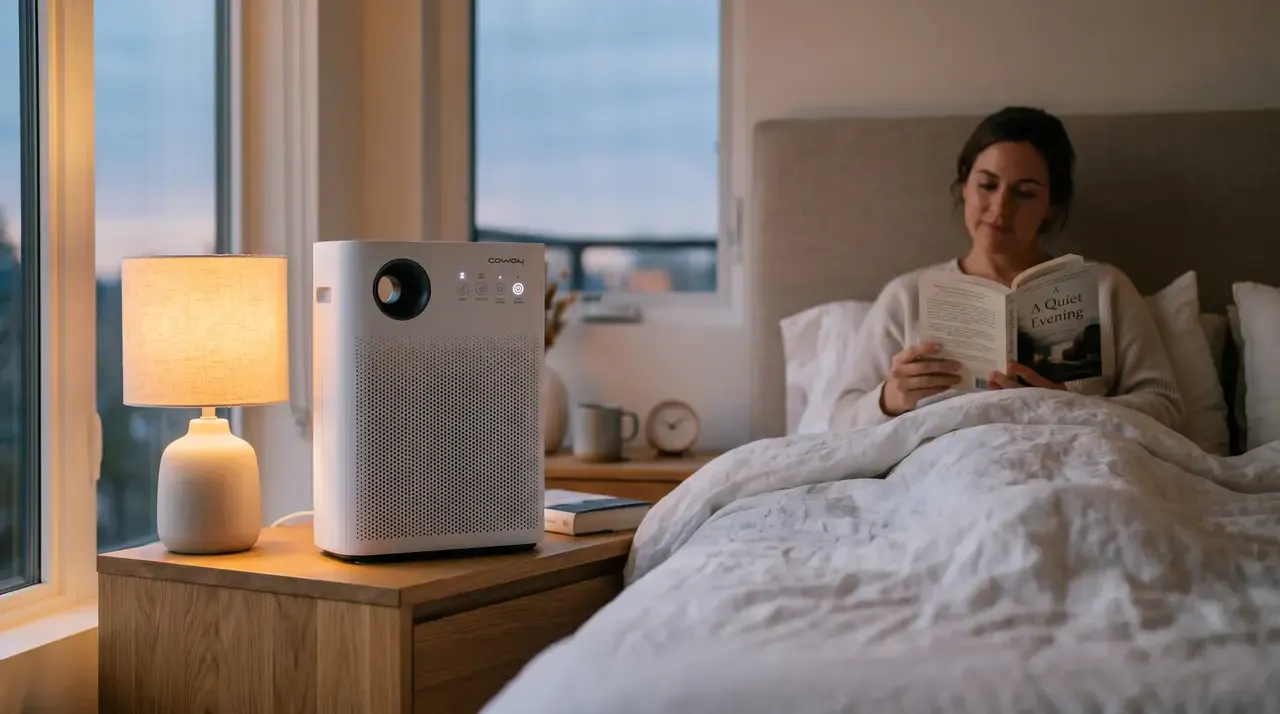
- CADR
- 246 / 249 / 277 CFM (Smoke / Dust / Pollen)
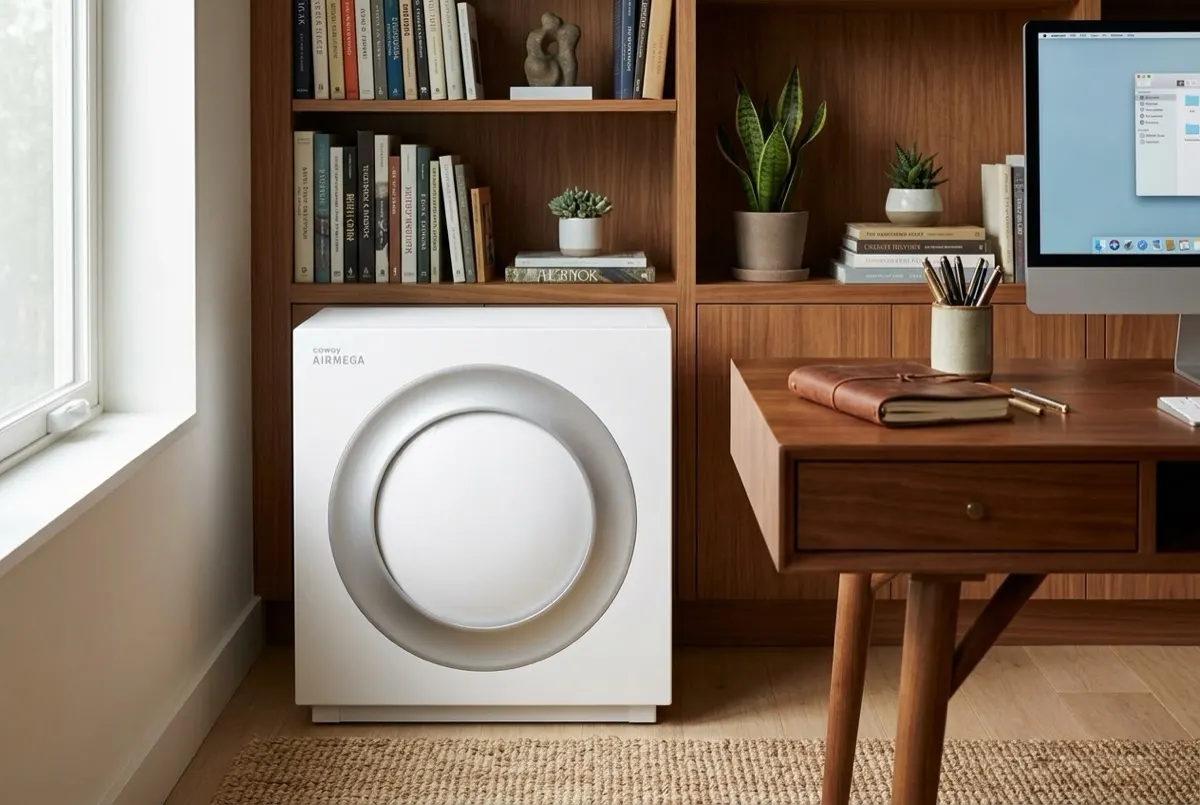
- CADR
- 240 / 242 / 249 CFM (Smoke / Dust / Pollen)
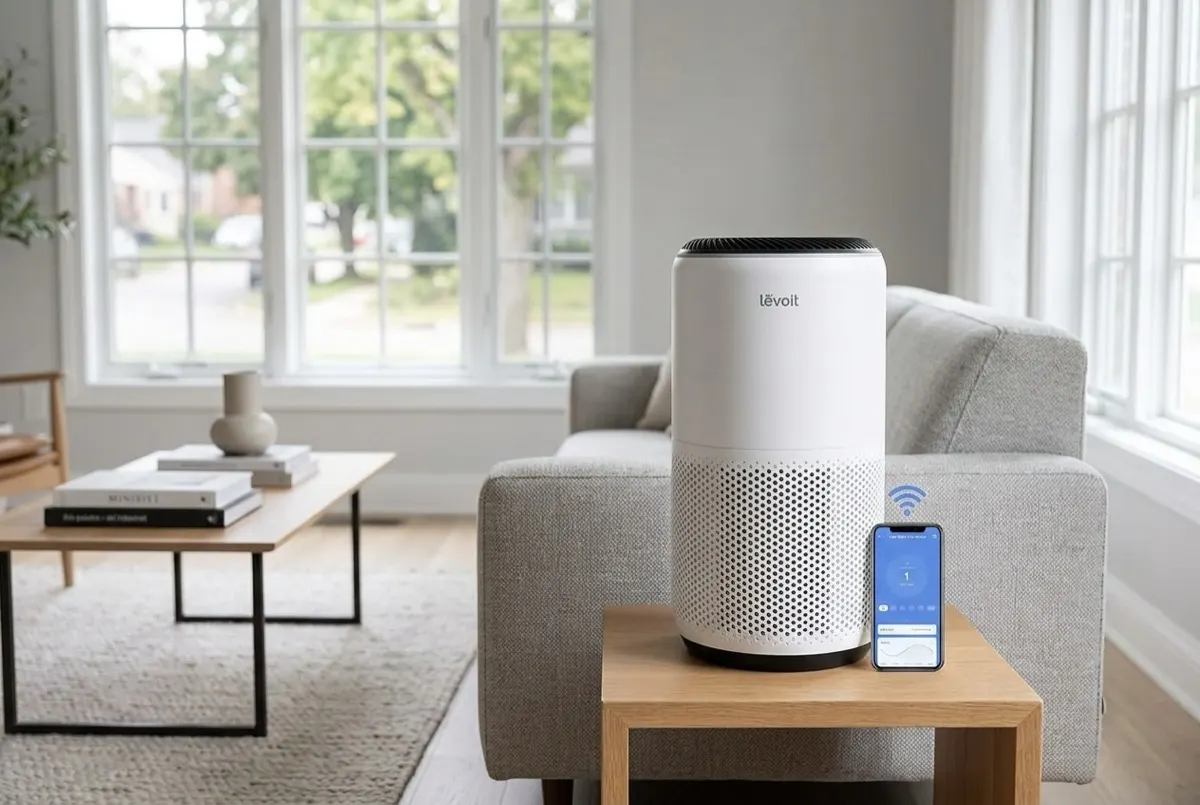
- CADR
- 234 / 233 / 257 CFM (Smoke / Dust / Pollen, AHAM Verifide)
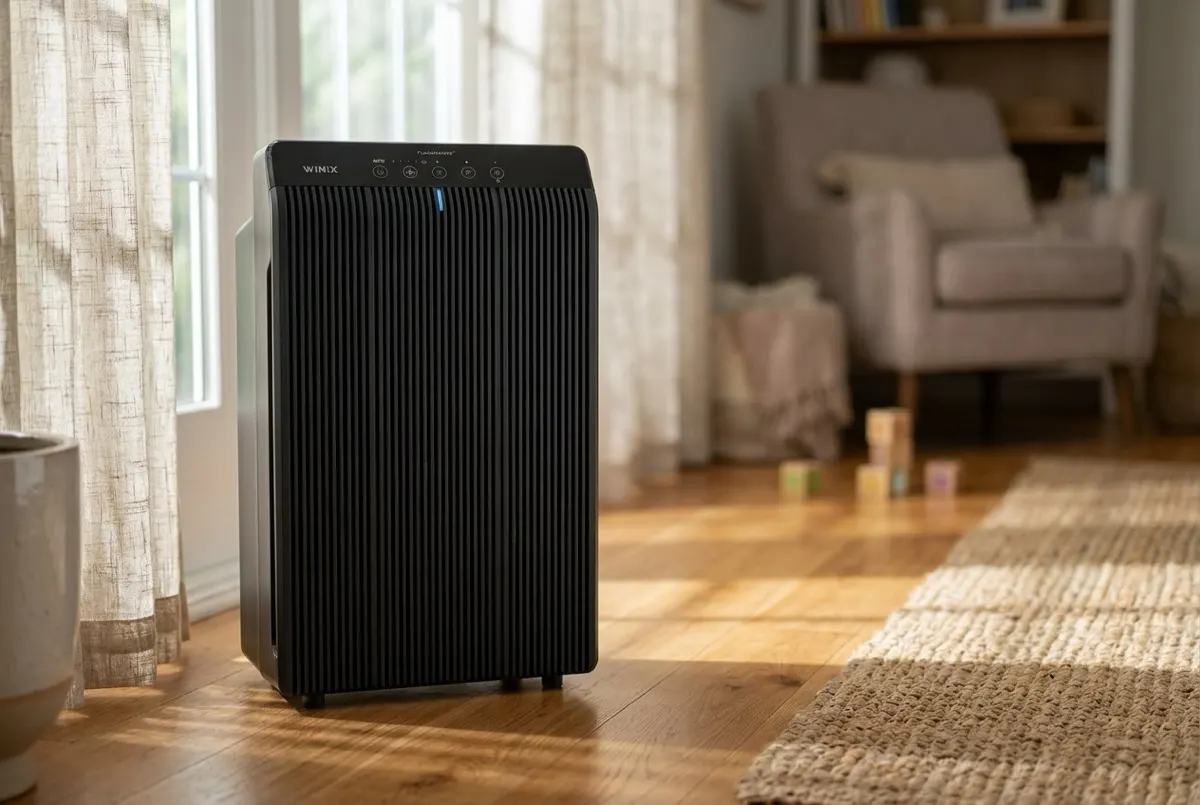
Winix 5510
Winix
- CADR
- 253 / 252 / 247 CFM (Smoke / Dust / Pollen, AHAM Verifide)
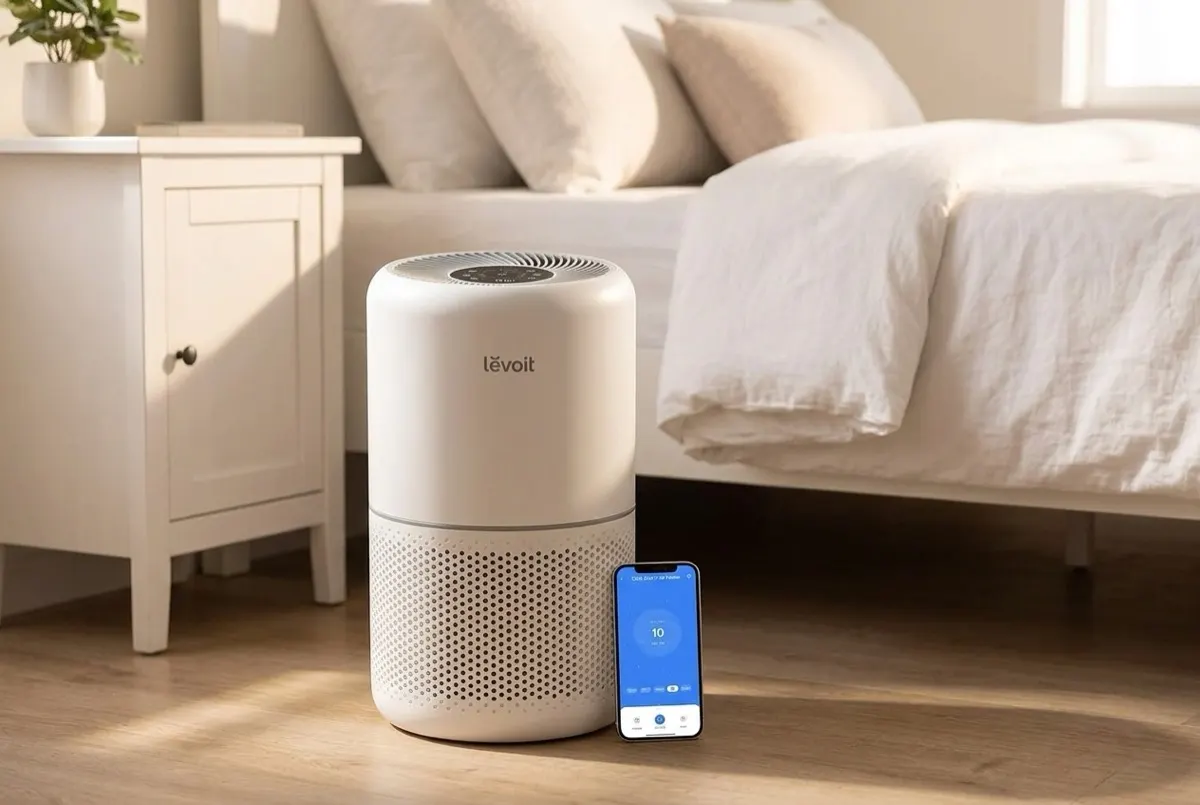
LEVOIT Core 300S
LEVOIT
- CADR
- 141 CFM
How we evaluate products
We compare published manufacturer specifications, manuals, support policies, and relevant public guidance. We do not present unpublished laboratory or in-home measurements as our own testing.
Features and services can change, so confirm current details with the manufacturer before buying. Affiliate commissions do not determine our editorial criteria.
Last reviewed: 2026-07-11
Products covered in this guide
Coway
Coway Airmega 200M
- CADR
- 246 / 249 / 277 CFM (Smoke / Dust / Pollen)
- Coverage
- 361 sq ft (4.8 ACH); 874 sq ft (2 ACH); 1,748 sq ft (1 ACH)
- Noise level
- 24.4-55.1 dB(A)
Coway
Coway Airmega Mighty2
- CADR
- 240 / 242 / 249 CFM (Smoke / Dust / Pollen)
- Coverage
- 1,800 sq ft (1 ACH)
- Noise level
- 19-50 dB
LEVOIT
LEVOIT Core 400S
- CADR
- 234 / 233 / 257 CFM (Smoke / Dust / Pollen, AHAM Verifide)
- Coverage
- 358 sq ft (4.8 ACH); 1,718 sq ft (1 ACH)
- Noise level
- 22-52 dB
Winix
Winix 5510
- CADR
- 253 / 252 / 247 CFM (Smoke / Dust / Pollen, AHAM Verifide)
- Coverage
- 392 sq ft (AHAM Verifide); 1,882 sq ft max room size (1 ACH)
- Power
- 65 W
LEVOIT
LEVOIT Core 300S
- CADR
- 141 CFM
- Coverage
- 219 sq ft (4.8 ACH); 1,051 sq ft (1 ACH)
- Noise level
- 22-50 dB
The importance of indoor air quality has never been more pronounced than it is in 2026. With increasingly tight, energy-efficient home construction trapping indoor pollutants, alongside the rising prevalence of extended allergy seasons and frequent wildfire smoke events, an air purifier is no longer a luxury appliance—it is a fundamental component of a healthy home environment.
Whether you are dealing with seasonal pollen, pet dander, volatile organic compounds (VOCs) off-gassing from new furniture, or particulate matter from outdoor pollution, the right air purifier can drastically transform the air you breathe. However, the market is currently flooded with devices making dubious claims about their filtration capabilities, coverage areas, and sensor accuracy. Finding a unit that actually performs to its specifications requires looking past marketing jargon and analyzing raw performance data, filtration mechanics, and long-term reliability.
Top picks at a glance
Phase 4: Acoustic Profiling
Because air purifiers are often left running 24/7, and frequently in bedrooms, noise levels are a critical factor. A purifier with a massive CADR is useless if it sounds like a jet engine and forces you to turn it off.
Best overall
Performance and Filtration
At the heart of the Airmega 200M is a formidable multi-stage filtration system. It begins with a washable pre-filter that captures large particles like pet hair, human hair, and dust bunnies, extending the life of the more expensive inner filters. Behind this sits an activated carbon deodorization filter designed to tackle VOCs, cooking smells, and household odors. Finally, the core of the machine is a True HEPA filter, rigorously tested to capture 99.97% of airborne particles down to 0.3 microns in size.
The Magic of Eco Mode
What truly elevates the Coway Airmega 200M above its competitors is its intelligent Eco mode, driven by an onboard particle sensor. Many users hate leaving their air purifiers running on high all day due to noise and electricity concerns. When placed in Eco mode, the 200M monitors the air quality in real-time. If the sensor detects that the air has remained clean for 30 consecutive minutes, it completely shuts off the fan, conserving energy and preserving filter life. The moment it detects a spike in pollutants—perhaps someone starts cooking in the next room, or a dog shakes off dander—the fan instantly powers back on, automatically adjusting its speed to deal with the threat. This "set it and forget it" functionality is flawlessly executed.
Acoustic Profile and Design
Weighing in at 12.3 lbs, the unit is substantial but still easy enough to move from the living room to the bedroom. Aesthetically, it features a sleek, minimalist design with a subtle, modern grille that blends seamlessly into most home decors.
Acoustically, the 200M is a triumph. On its lowest setting, it produces a barely perceptible 24 dB of noise, making it virtually silent and perfect for light sleepers. Even when pushed to its absolute maximum setting, it tops out at 53 dB. While 53 dB is audible, the acoustic profile is a smooth, low-frequency rushing sound devoid of any mechanical whining, making it an excellent white noise generator for sleeping.
Pros and Cons
Pros:
- Exceptional value for a True HEPA + Activated Carbon system.
- Flawless Eco mode saves electricity and filter life.
- Highly accurate onboard particle sensor.
- Whisper-quiet on lower settings (24 dB).
- Washable pre-filter is easy to maintain.
Cons:
- The activated carbon filter is a coated sheet rather than dense pellets, which may saturate faster in homes with heavy, constant odors.
- Lacks Wi-Fi connectivity and smartphone app integration for those who want remote control.
Ideal Buyer
The Coway Airmega 200M is the perfect air purifier for the vast majority of households. If you want a highly effective, reliable, and unobtrusive machine for a master bedroom, living room, or home office, and you prefer an appliance that manages itself without requiring you to constantly adjust settings or check a smartphone app, this is the definitive choice.
Best for allergies
For individuals suffering from severe seasonal allergies, asthma, or hypersensitivity to pet dander and dust mites, standard air purifiers often fall short. An allergy sufferer needs certainty that the air exiting the machine is genuinely clean. In this demanding category, the Coway Airmega Mighty2 (ASIN: B0GS7FF1D6) is the standout choice — the next-generation successor to the legendary AP-1512HH, built around pure mechanical filtration with no ionizer in the air path at all. The full breakdown lives in the Coway Airmega Mighty2 review.
Sealed True HEPA, no ionizer
The most reassuring feature of the Mighty2 for a sensitive household is what it leaves out. The previous generation included a bipolar ionizer; Coway has removed it entirely, so every particle the Mighty2 captures is trapped mechanically in its sealed Max2 filter. That single combined panel folds True HEPA media — rated to capture 99.97% of airborne particles down to 0.3 microns — together with an activated-carbon layer, sitting behind a washable pre-filter. For allergy and asthma sufferers who want clean air with nothing extra added to it, that pure-mechanical path is exactly right.
A laser sensor that sees the fine stuff
The Mighty2's MegaScan laser sensor reads three particle sizes separately: PM1, PM2.5 and PM10. That matters because PM1 covers the ultrafine combustion particulate — the fraction most associated with respiratory harm — that cheaper on/off sensors miss entirely. The sensor drives a true auto mode that raises and lowers the fan to chase the air clean, then eases off once the readings settle, so an allergy household is protected without anyone having to babysit the controls.
Quiet, efficient, and right-sized
With a smoke CADR of 240 CFM, the Mighty2 cleans a room of roughly 360 square feet at a meaningful 4.8 air changes per hour — a primary bedroom, a home office or an average living room. Its noise floor drops to around 19 dB, low enough to vanish in a dark bedroom, and Coway reworked the electronics to cut peak power draw, a real benefit for a machine many allergy sufferers run around the clock.
Ideal buyer: allergy and asthma sufferers who want the AP-1512HH's legendary reliability brought fully up to date, with laser sensing, near-silent nights and a purely mechanical, ionizer-free air path.
Best for smoke
Smoke and heavy odor are a different challenge from pollen and dust. Fine smoke particulate needs strong True HEPA capture, but the gas-phase smell of smoke, cooking and VOCs can only be adsorbed by carbon — and the depth of that carbon is what separates a smoke specialist from an ordinary purifier. For that job the Winix 5510 (ASIN: B0DJG1731C) is the pick, and the Winix 5510 review covers it in full.
Four stages, deep carbon
Where most purifiers in this class run three filtration stages, the 5510 runs four: a washable pre-filter, a substantial Advanced Odor Control (AOC) carbon layer built from a granular mesh rather than a thin coated sheet, a True HEPA filter, and an optional PlasmaWave stage that can be switched off entirely. That deep granular carbon bed is the reason the platform has a long reputation for taming smoke and cooking smells that lesser carbon layers simply pass through.
Large-room airflow with a brain
As the app-enabled successor to the long-popular 5500-2, the 5510 finally adds Wi-Fi, a companion app and a true auto mode driven by an onboard air quality sensor. Its smoke CADR of 253 CFM cleans a large room of roughly 380 square feet at 4.8 air changes per hour, so it suits open living spaces and households genuinely fighting smoke rather than the occasional stray odor.
Ideal buyer: anyone whose primary enemy is smoke, cooking odor or VOCs in a large room, and owners of the older 5500-2 who want modern app control and auto mode.
Best for large rooms
When the space in question is a genuine living room or open-plan area, airflow is everything. The LEVOIT Core 400S (ASIN: B08R794ZMX) is the large-room answer, pairing a medical-grade H13 True HEPA filter with a strong 231 CFM smoke CADR — enough to clean roughly 347 square feet at 4.8 air changes per hour. Its AirSight Plus laser sensor shows a live PM2.5 figure on the display and drives a genuine auto mode, and the whole unit connects to the VeSync app for scheduling and voice control. The LEVOIT Core 400S review has the details. It is the pick for households that need to clean a real living space without stepping into premium pricing.
Best compact and smart pick
For a single bedroom, nursery or home office, a large machine is overkill. The LEVOIT Core 300S (ASIN: B0G19ZCNP9) is the smart small-room standard and the direct Wi-Fi successor to the discontinued Core 300 — the same compact 360-degree body and 3-stage True HEPA filtration, now with an app, Alexa and Google voice control, scheduling and a timer the original lacked. Its 141 CFM smoke CADR suits rooms up to 219 square feet, and its QuietKEAP sleep mode is rated as low as 22 dB for undisturbed nights. The LEVOIT Core 300S review covers the full picture. Anyone whose trusty Core 300 has finally been retired should simply move up to the 300S.